University of Georgia
Complete Platform Redesign for UGA College of Agriculture
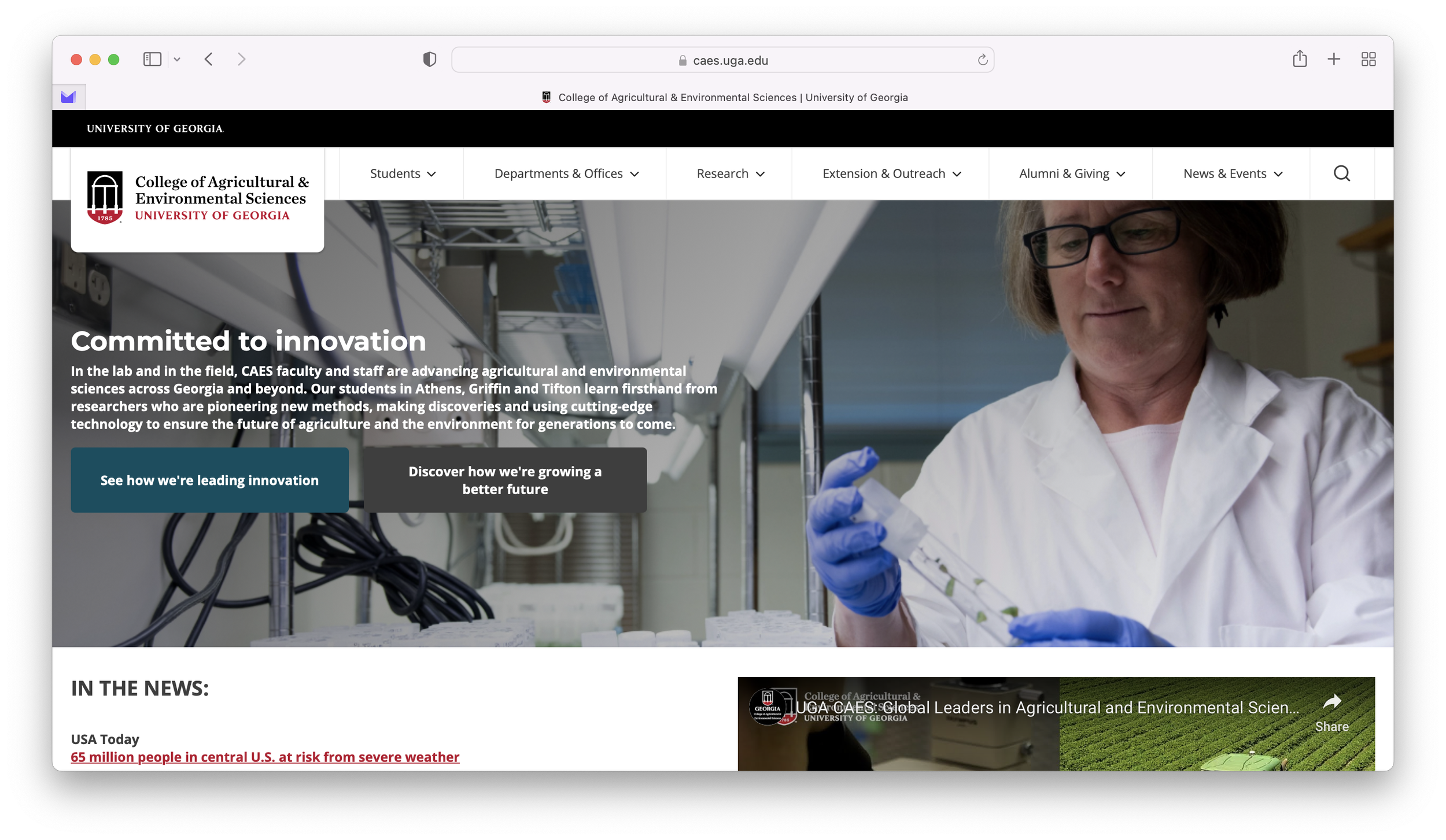
I was the Product Design and UX Lead for a complete redesign and content system migration for the whole web platform, consisting of thousands of pages. I developed a style guide and design system of new components from the ground up, including page templates, mobile-first design and navigation patters, and more.
The Problem
- The existing site was built of different and inconsistent templates. Some content was directed at students, while other content was directed at internal staff. We sought to unify the template structure to reduce duplication of effort and increase our development velocity.
- We also needed to add new features like news alerts, an improved personnel directory, as well as the ability to highlight the impact groundbreaking research being done at the college.
- The site also needed to be Improved for readability and clarity.
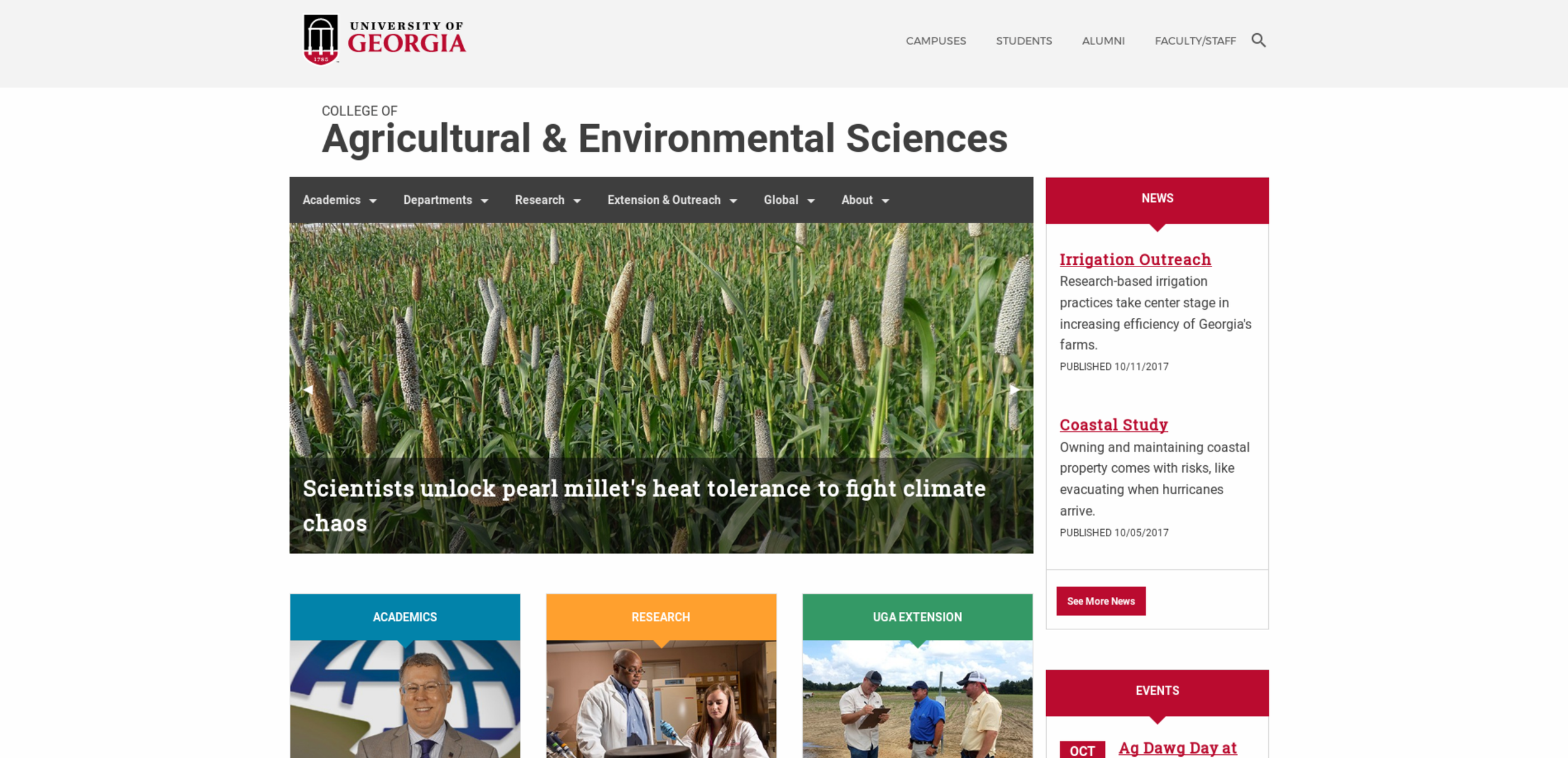
The existing site (shown here) lacked responsive or mobile-first design. Additional, components like the image slider lacked visible controls and the various colors throughout the site were confusing and illogical due to their haphazard use.
Lastly, as you can see in the screenshot, there were two levels of horizontal navigation, which confused users, especially as they navigated deeper into departmental sites. We knew that we would need to completely rethink the navigation paradigm.
Approach
Start with Research
- Started with an audit of existing analytics and data as well as stakeholder and internal staff interviews. Since were were migrating to a new content management system - it was vital that the usability of managing the site was considered in the component design.
- I also conducted interviews with current and prospective students, as well as current and prospective research staff to understand what content and visual elements would help them make a choice about the University of Georgia compared to other research institutions. Both user groups voiced the desire to understand the impact alumni and staff had through research initiatives.
- We also used the research sessions to validate a new navigation structure through card sorting activities, followed by low-fidelity prototype testing to validate our overall structure and template.
Navigation Approach
We developed a large mega-menu that allowed us to add call-to-action sections as well as more thoughtful and clear sections for link lists. In our research, users were far less overwhelmed when given 1-2 sentences of context for each of the navigation sections, which led to a reduced bounce rate and a reduced number of clicks for users to complete “top tasks” or key tasks, such as scheduling a campus visit.
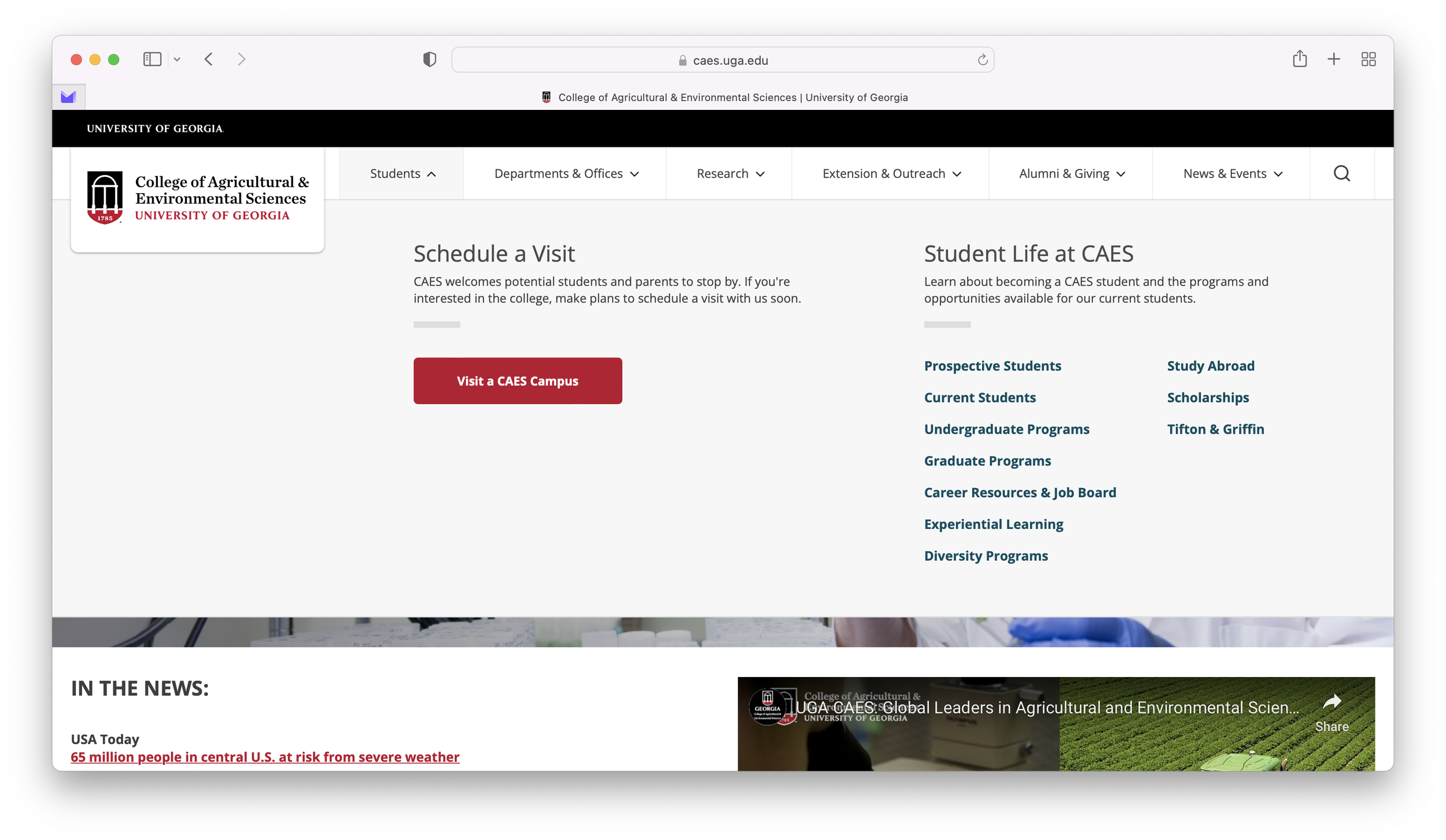
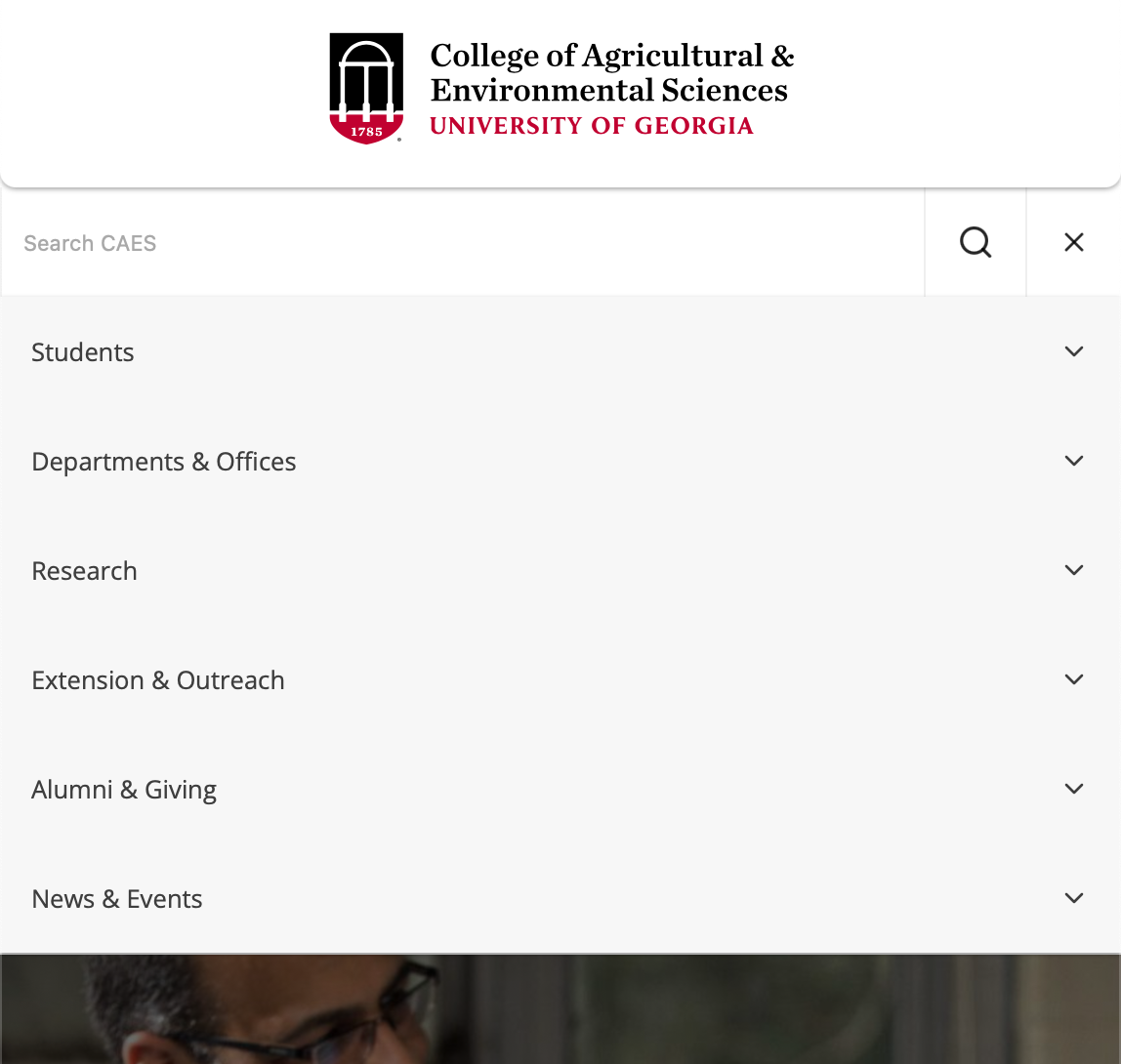
As you can see from this series of screenshots, we were able to develop a concise mobile navigation menu that still preserved the same space and way-finding content to reduce cognitive overload on users.
Design System Components
We developed over two dozen additional components for the site, ranging from news cards and event lists, image banners, gallery views, impact statistic visualizations, and more.
We also designed a new side-navigation that utilized a variety of color, depth, and hover effects to help with way-finding in complex departments deep within the site structure.
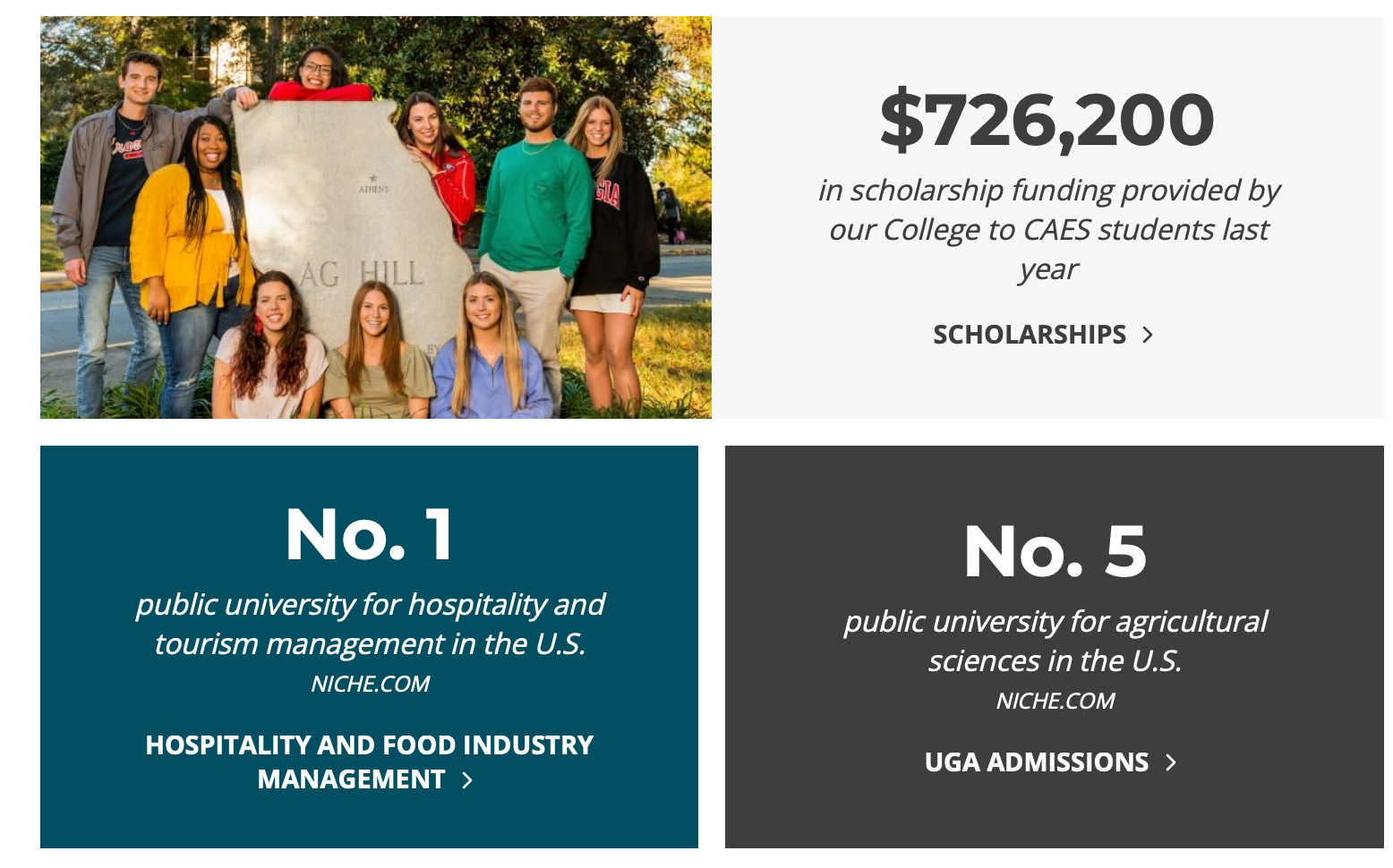

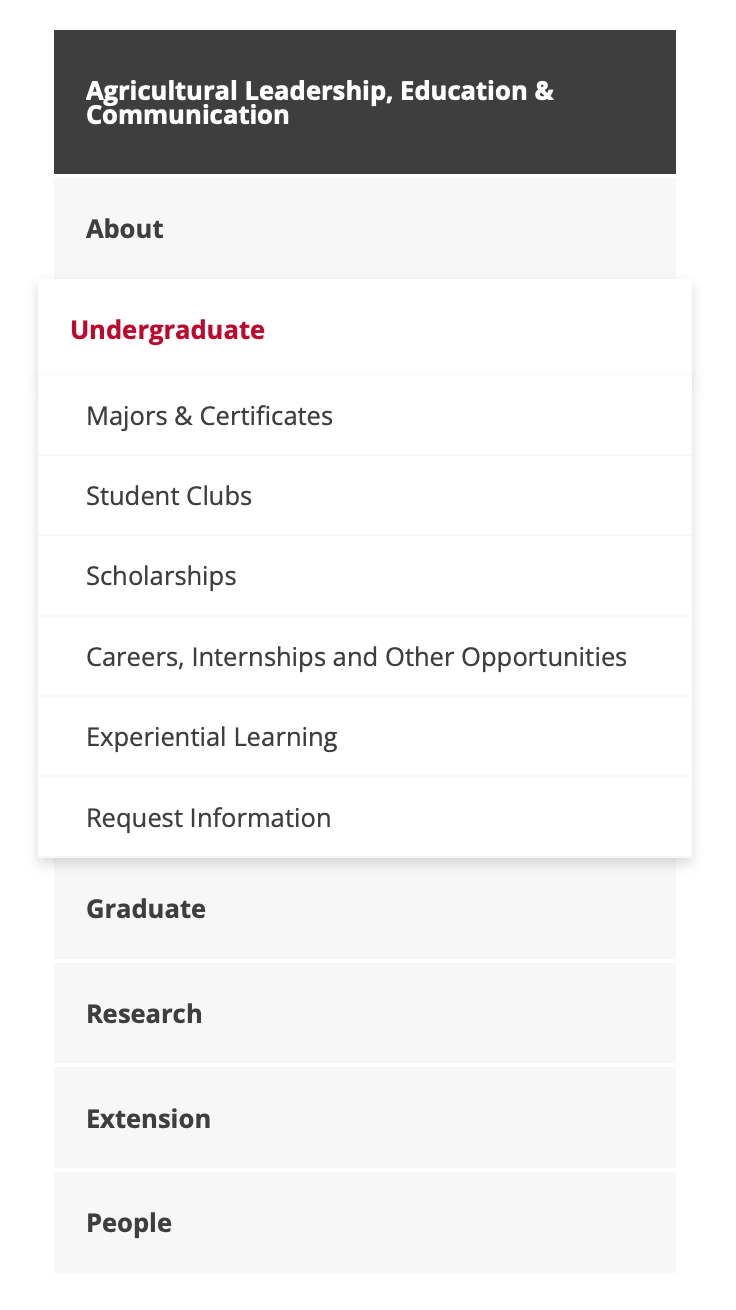
As you can see from this series of screenshots, we were able to develop a concise mobile navigation menu that still preserved the same space and way-finding content to reduce cognitive overload on users.
Outcomes
- Accomplished the redesign on-schedule for all departments, sub-sites, and pages.
- Increased faculty web management productivity by roughly 30% (according to a post-launch survey as well as the time-to-deploy for new pages).
- Designs won multiple awards from the Association for Communication Excellence.
- While enrollment is due to multiple factors, graduate enrollment for the College of Agriculture has increased by 20.7% since 2017, and increased web traffic and the percentage of visitors who schedule a campus visit also increased.